Arthritis in Dogs

August 1st, 2005

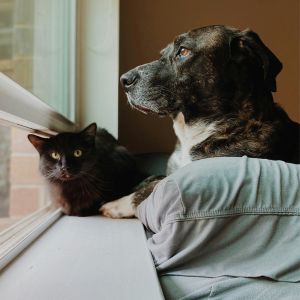
Pets are living longer these days as nutrition and veterinary healthcare become more informed and effective. With longevity comes more opportunity for age-related diseases to raise their ugly heads. One of the most common diseases seen in geriatric (over age 7 years) dogs is osteoarthritis (OA). Fido’s reluctance to navigate stairs or jump into the car, his stiffness after getting out of bed in the morning, or his limp can all be warning signs that he suffers from OA.

Many factors influence whether and when a dog develops OA. Dogs with hereditary malformations of a joint such as hip or elbow dysplasia can develop OA fairly early in life. An injury such as a cranial cruciate ligament tear (equivalent to human ACL) in a dog’s knee virtually guarantees OA, even if the injury is discovered and surgically corrected quickly. Infection or anything causing inflammation of a joint can lead to OA. Finally, a rapid weight gain or simply being overweight also significantly predispose a dog to the discomfort of OA.

OA is a slowly progressive inflammatory disease of the cartilage lining joints. The job of this cartilage is to make joints move smoothly and to cushion the forces of weight as they are transferred between bones. Whatever the cause of a dog’s OA, a vicious cycle is begun where abnormal biomechanics and physiology of the joint cause inflammation and degradation of cartilage, which then worsen the abnormal biomechanics and physiology. This eventually results in fragmentation of the cartilage surface and bony remodeling at the joint periphery. Without normal cartilage, the simple act of walking becomes painful.

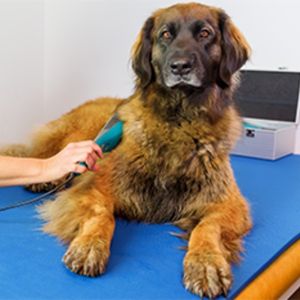
Management of OA is usually most successful when a multifaceted approach is used. The goals are directed at controlling pain and maintaining function of affected joints. Weight control is often one of the first steps in managing your dog’s OA. Keeping weight in the normal-to-light range reduces the stress placed on joints. This, combined with sufficient muscular support of joints achieved through regular, limited exercise, can make many dogs more comfortable. Your veterinarian may also prescribe a physical therapy routine to help maintain function and range of motion in your dog’s arthritic joints.

A second facet to management involves neutraceutical supplements such as glucosamine, chondroitin, and omega-3 fatty acids. These act to provide precursors needed to repair damaged arthritic cartilage. They also have antioxidant properties that help reduce the mediators that cause inflammation in joints. Neutraceuticals are now incorporated into some prescription veterinary diets, in addition to being available in supplement form.

The mainstay of OA management lies in treatment with non-steroidal anti-inflammatory drugs (NSAIDs). These compounds block the production of molecules that promote the inflammation that makes OA painful. Prescription veterinary NSAIDs are the best choice because they are designed specifically for a dog’s physiology and metabolism. Your veterinarian may discuss the importance of performing bloodwork prior to initiating treatment and periodically while your dog is on NSAIDs to monitor the function of organs that are important in the metabolism and elimination of these drugs from the body. One important thing to remember is to NEVER give ibuprofen (Advil, Motrin) or acetaminophen (Tylenol) to your dog. Dogs do not have the ability to metabolize these drugs like humans do, so they accumulate and become toxic. A good, safe plan is to talk with your veterinarian before giving ANY pill to your dog (or cat).

Recognizing the signs of OA and discussing them with your veterinarian are important as your dog ages. There are many ways to keep your pet comfortable and active as she ages. Talk with your veterinarian about the best plan of action for your dog.

Written by:
By Katharine Evans, DVM
Claremont Animal Hospital, Inc.

Entry Filed under: Pet Pages


Pages

Calendar

September 2010
M T W T F S S
« Dec    
 12345
6789101112
13141516171819
20212223242526
27282930  

Most Recent Posts